
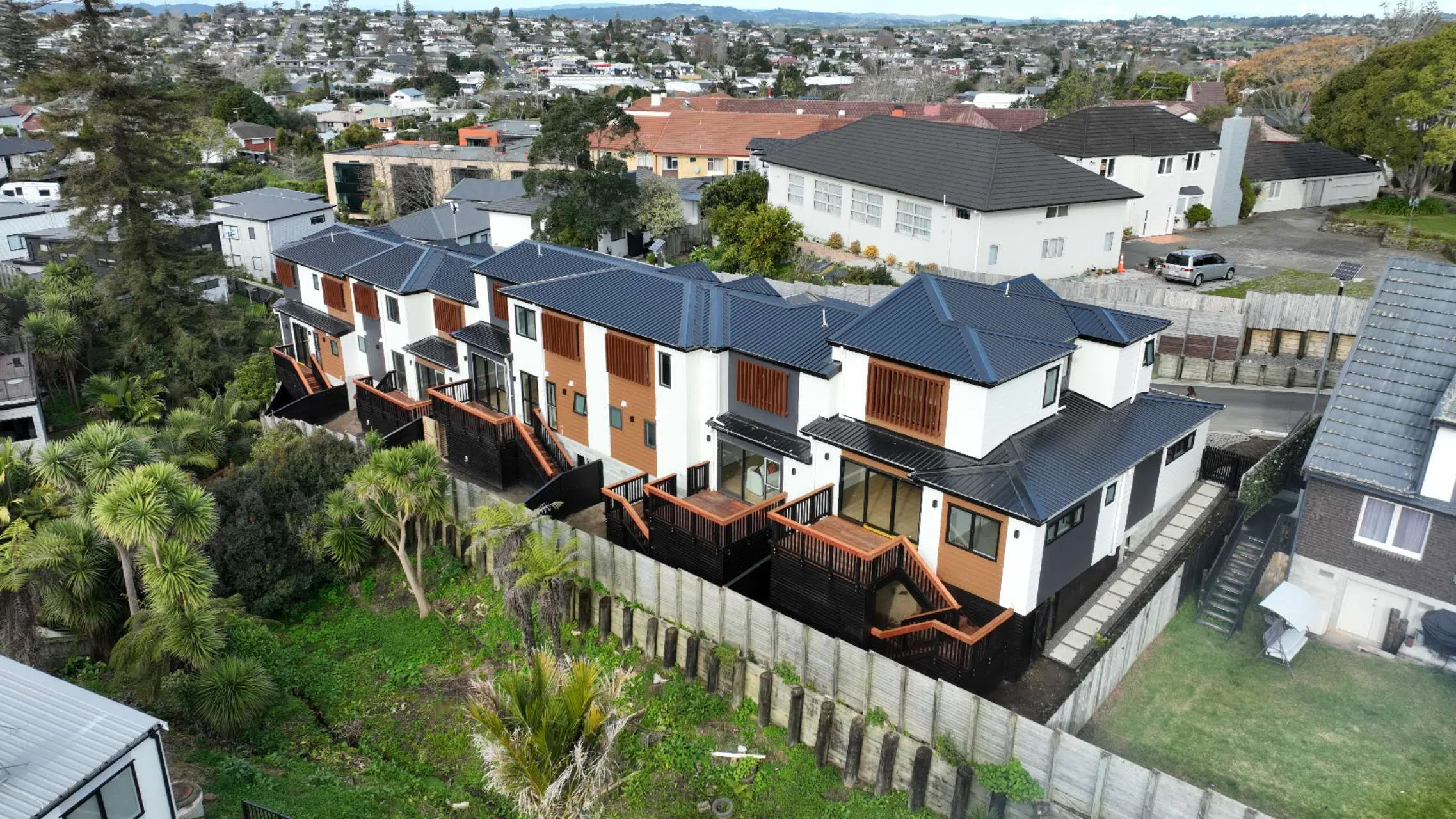
Howick — site photography supplied by the developer.
Howick and Pakuranga have sat near the top of Auckland’s rental price tables for years. Barfoot & Thompson — New Zealand’s largest private residential property manager — recorded an average weekly rent of $752.23 across its combined Pakuranga/Howick reporting area for the quarter to 31 March 2025, level with or slightly ahead of Auckland’s other traditionally premium rental pocket, the Eastern Suburbs ($750.72). That’s well above the citywide figures reported through 2026: Trade Me’s Rental Price Index had Auckland’s median weekly rent at $655 as of 22 July 2026, and Barfoot & Thompson’s own May 2026 update put the metro-wide average at $697.42.
If you’re buying rather than renting, that gap is worth understanding — not as a promise of what a specific property will earn, but as context for what kind of suburb you’re buying into.
What do the numbers actually say about rents in Howick?
The clearest, most specific figures come from Barfoot & Thompson’s quarterly rental report for the three months to 31 March 2025, which groups Howick with neighbouring Pakuranga as one reporting area. The bedroom-by-bedroom breakdown:
- 1 bedroom: $443.20 a week
- 2 bedroom: $574.47 a week
- 3 bedroom: $690.91 a week
- 4 bedroom: $830.42 a week
- 5 bedroom: $1,025.86 a week
- All dwellings, average: $752.23 a week, up 2.07% year-on-year
Worth noting the terms carefully, because they’re not interchangeable: Barfoot & Thompson’s figures are averages drawn from the rentals the firm manages, while Trade Me’s Rental Price Index reports a median across listings nationwide. Different methodology, different number — which is exactly why it matters to compare Howick against a citywide figure using the same source where possible, rather than mixing an average from one dataset with a median from another and assuming they’re describing the same thing.
For three- and four-bedroom homes specifically — the size range most comparable to a family home rather than a studio or apartment — Pakuranga/Howick rents ran at $690.91 and $830.42 a week respectively as at that report. Rental figures move month to month, so treat these as a dated snapshot rather than today’s number; Tenancy Services’ official market rent tool and Barfoot & Thompson’s ongoing monthly updates are the places to check the current figure for a specific bedroom count.
Is this a new spike, or a long-running pattern?
The pattern predates 2025. Barfoot & Thompson data reported in February 2024 already had Pakuranga/Howick as the second most expensive of the firm’s Auckland reporting areas, at $725 a week — behind only the Eastern Suburbs at $734, and ahead of the western part of central Auckland at $714. By the quarter to 31 March 2025, Pakuranga/Howick’s average had risen to $752.23, moving it essentially level with the Eastern Suburbs.
That’s a consistent 13-month stretch of Pakuranga/Howick sitting among the highest-rent areas Barfoot & Thompson reports across metropolitan Auckland — not a single data point, and not a short-term spike tied to one quarter’s figures.
Why does Howick sit above Auckland’s rental average?
A few things line up. Howick is an established East Auckland suburb — settled streets, mature trees, a village centre, and coastal access along the eastern bays — rather than a new-growth area still being built out. Botany Town Centre, one of Auckland’s larger retail and services hubs, sits close by. The area is well served by bus routes into the city and connects to the Pakuranga and Ti Rakau corridors and the Southern Motorway.
None of that is unique to Howick — several Auckland suburbs share some of these features. What tends to be scarcer in an established area like this is newly built, low-maintenance housing. Much of Howick’s existing housing stock dates from earlier development waves; a genuinely new home, built to current standards, is a smaller slice of what’s available to either buy or rent locally. That scarcity of new stock in a suburb that already has strong underlying demand is a reasonable part of the explanation for rents running above the Auckland average — though it’s one factor among several, not the whole story.
On schools specifically: Howick has a number of schools in and around the area, but zone boundaries are set and changed by individual school boards, not by us. If a specific zone matters to your decision, check the Ministry of Education’s official school finder at educationcounts.govt.nz for the address in question, rather than relying on a general suburb description.
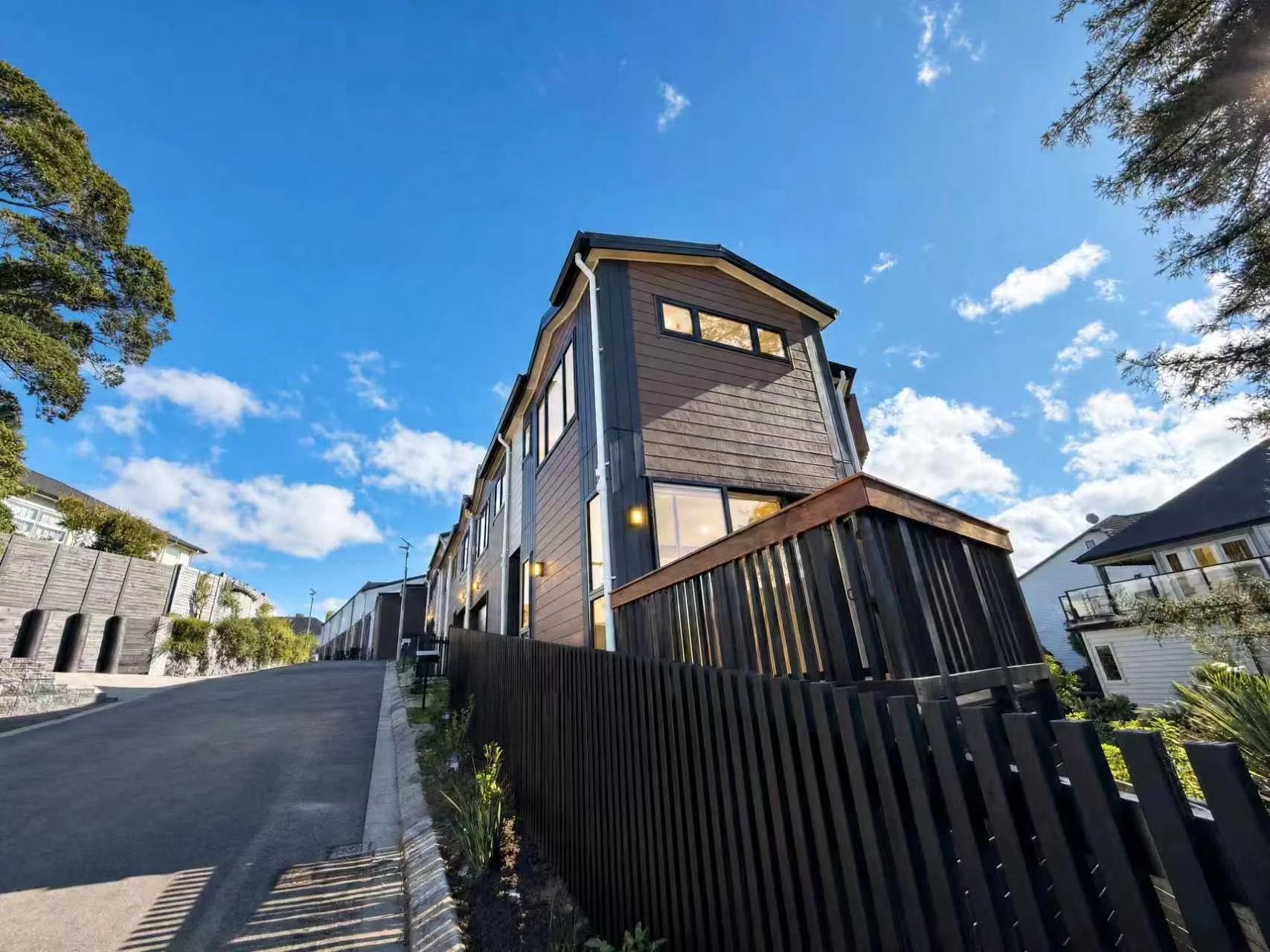
Howick — site photography supplied by the developer.
What does a rental premium mean if you’re buying rather than renting?
Rent data describes tenant demand, not future performance. What it can tell you, descriptively, is this: an area where a meaningful share of the local population is renting, and where rents have held above the city average for more than a year, is an area where a new, well-specified home is likely to appeal to that same rental market if you’re not living in it yourself — and where the pool of people who’d rather rent an established suburb like Howick than a newer-growth area further out has, on this data, been reasonably deep for some time.
That’s descriptive, not predictive. Past rent levels are not a guarantee of future rental income, occupancy or capital growth, and this article isn’t personalised financial advice. If you’re weighing a purchase partly on rental potential, get your own numbers from a property manager or valuer for the specific property, and talk to a licensed financial adviser or accountant about how it fits your situation.
What’s the difference for owner-occupiers versus investors?
The same data reads differently depending on why you’re buying.
If you’re buying to live in it — upgrading, downsizing, or buying your first home — the relevant point isn’t the rent roll, it’s what strong, sustained rental demand usually signals about a suburb: established infrastructure, amenity that’s already built rather than promised, and a settled community rather than one still forming. Those are reasonable things to want in a suburb regardless of whether you ever rent the place out.
If you’re buying as an investor, the rental data above is a starting point for your own due diligence, not a substitute for it. A new-build home in a low-maintenance size range — three or four bedrooms, roughly 125–150m² — sits in the bedroom brackets where Pakuranga/Howick’s reported rents were highest in absolute terms ($690.91–$830.42 a week as at the most recent quarterly breakdown). Whether that translates into a sound investment for you depends on the purchase price, your finance terms, ongoing costs including rates and insurance, and your own risk tolerance — all things this article can’t calculate for you.
Further reading
A new release in the middle of this market
Park Homes’ Howick development sits at 3 Libby Lane, in the heart of this same East Auckland suburb: five homes, three to four bedrooms, 125.5–150m², from $900k. It’s now selling, with completion expected by the end of 2026 — a boutique release rather than a large subdivision, built under a Licensed Building Practitioner with quality control held from consent through to handover.
We’re not going to tell you what a specific home at Libby Lane will rent for — that’s a question for a local property manager, using the current market rent for the address and bedroom count, not a suburb-wide average from a quarterly report. What the data above does tell you is the kind of demand environment Howick has shown over more than a year: an established suburb, limited new low-maintenance stock, and rents that have consistently run above Auckland’s citywide figures.
If you’re comparing Howick against other parts of Auckland, the numbers in this article are the ones we’d want you to check independently — Barfoot & Thompson’s published rental reports and Tenancy Services’ market rent tool are both public — and then come and see what’s actually being built on Libby Lane.